Visualize the Invisible
An interactive 3D playground for solid-state physics. Explore unit cells, lattice structures, and symmetry operations directly in your browser.
Simple Cubic Lattice
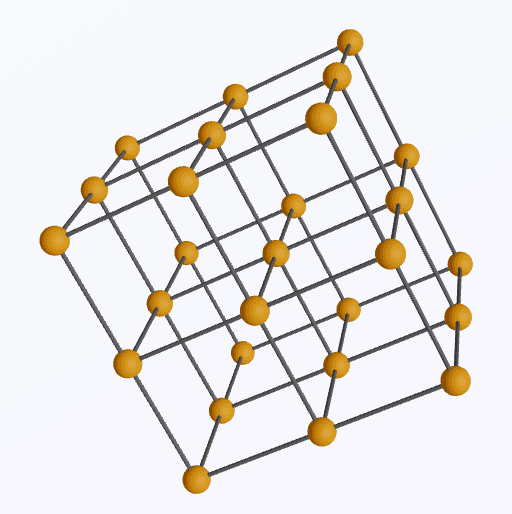
Explore the Simple Cubic (SC) lattice, also known as Primitive Cubic. This fundamental crystal structure has atoms only at the corners of the cube with a coordination number of 6. Common in Polonium (Po).
Start Visualization →Body-Centered Cubic (BCC)
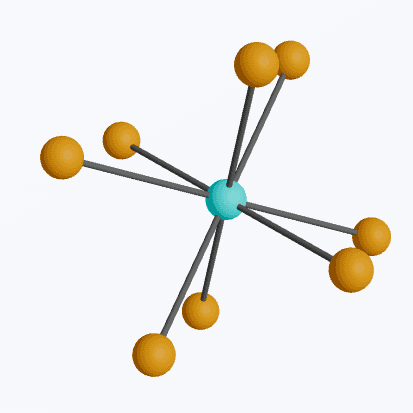
Body-Centered Cubic (BCC) structure features one atom at the center of the cube and eight corner atoms. Coordination number: 8. Used by alkali metals and transition metals like iron at room temperature.
Start Visualization →Face-Centered Cubic (FCC)
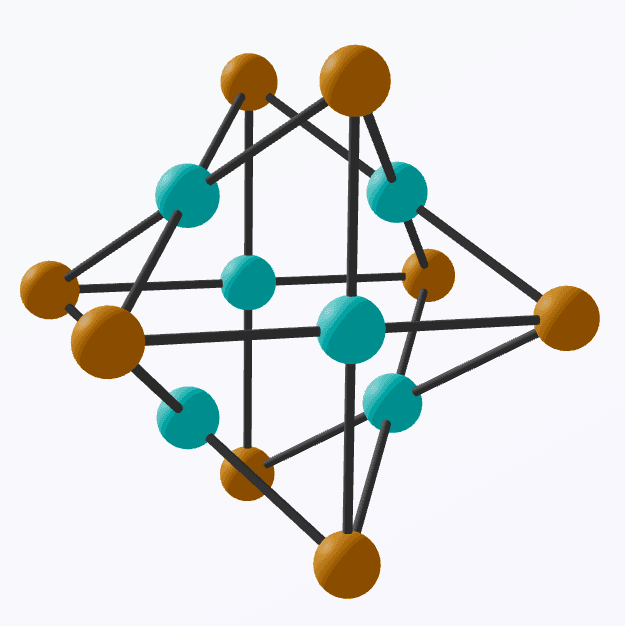
Face-Centered Cubic (FCC) is a close-packed structure with atoms at each corner and the center of all cube faces. Coordination number: 12. Highest packing efficiency (74%) among cubic systems.
Start Visualization →Sodium Chloride (NaCl) - Rock Salt
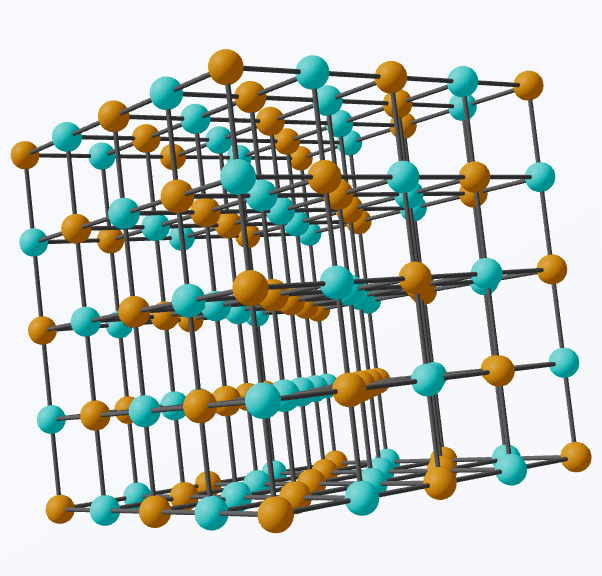
The classic rock salt structure: two interpenetrating FCC lattices of Na⁺ and Cl⁻ ions. Coordination: 6:6. The most common structure for 1:1 ionic compounds.
Start Visualization →Cesium Chloride (CsCl)
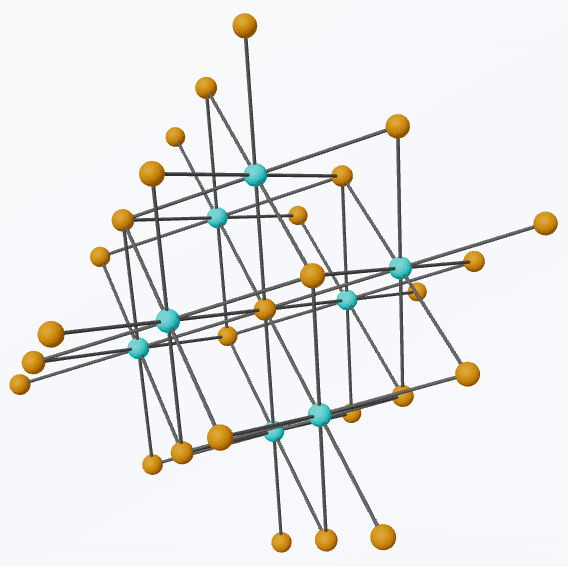
CsCl features a primitive cubic lattice with a two-atom basis (Cs⁺ at center, Cl⁻ at corners or vice versa). Coordination: 8:8. Common when cation and anion sizes are similar.
Start Visualization →Simple Tetragonal Lattice
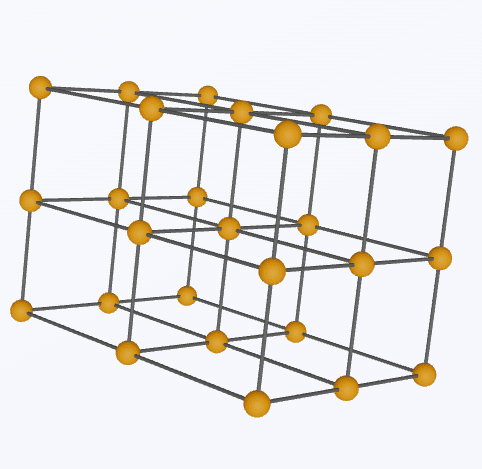
A cubic lattice stretched or compressed along one axis (c ≠ a). Used in materials like Tin (white tin) and Indium.
Start Visualization →Simple Orthorhombic Lattice
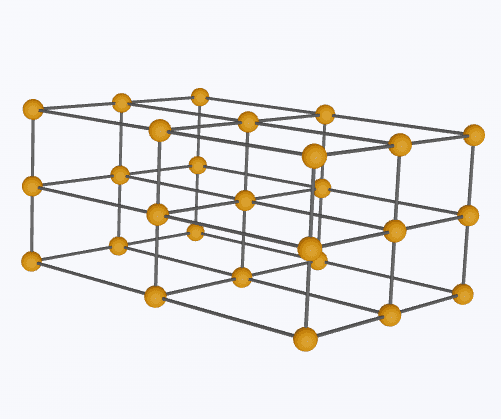
All axes unequal (a ≠ b ≠ c) with 90° angles. Forms a rectangular prism.
Start Visualization →Simple Monoclinic Lattice
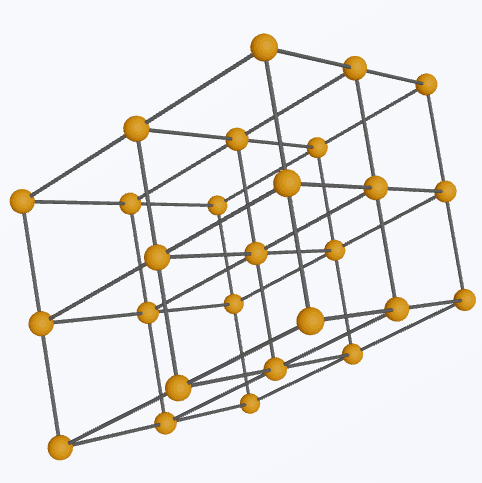
One angle ≠ 90° (usually β), like a distorted or sheared box.
Start Visualization →Triclinic Lattice
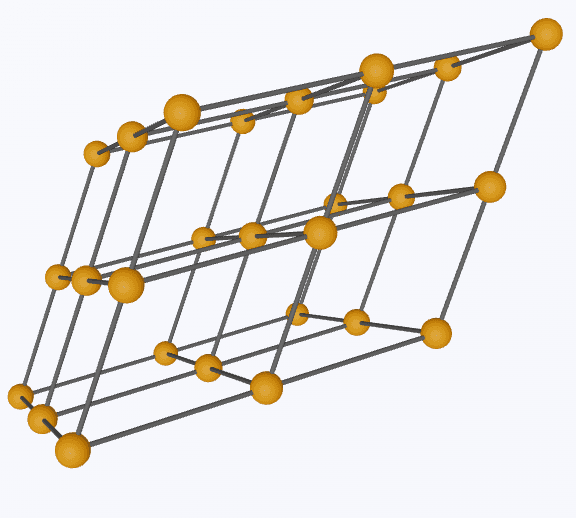
All axes unequal, all angles ≠ 90°. The least symmetric of the 7 crystal systems.
Start Visualization →Hexagonal Lattice
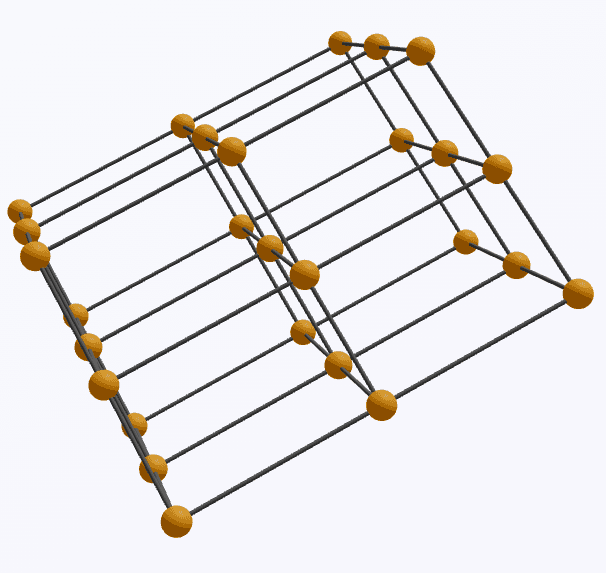
Features a primitive cell with a 120° angle in the basal plane. Basis for Hexagonal Close-Packed (HCP) metals like Magnesium and Zinc.
Start Visualization →Rhombohedral (Trigonal) Lattice
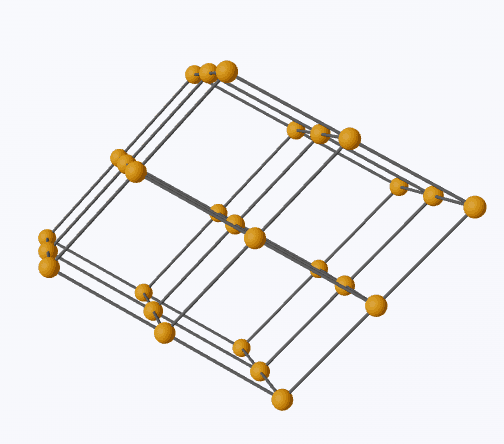
A primitive lattice where all sides are equal but angles ≠ 90°. Can be viewed as a stretched/skewed cube. Also called Trigonal.
Start Visualization →3D Manipulation
Rotate, zoom, and pan around crystal lattices to understand their geometry from every angle.
Reciprocal Space
Visualize Brillouin Zones and reciprocal lattice vectors alongside real-space structures.
Supercells
Expand unit cells into larger supercells (NxNxN) to see bulk material properties.